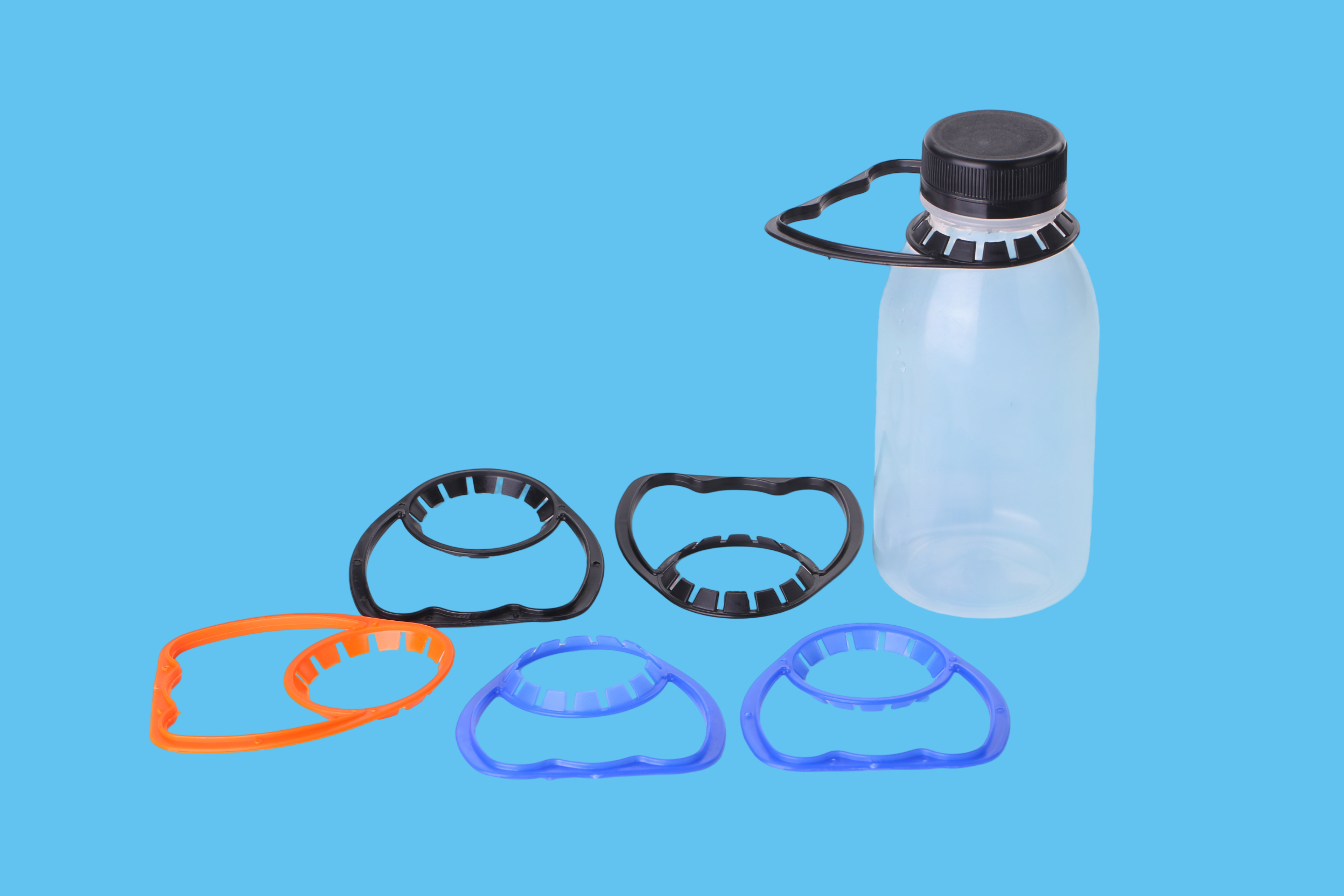

Large volume water containers present unique handling challenges that traditional grip methods simply cannot address effectively. When water containers exceed five gallons or reach industrial-scale capacities, the weight distribution and lifting mechanics require specialized ergonomic bottle handle solutions to ensure safe transportation and prevent workplace injuries. Understanding the biomechanical principles behind effective bottle handle design becomes crucial for facilities managers, warehouse operators, and logistics professionals who regularly manage heavy liquid containers.

The evolution of ergonomic bottle handle designs has transformed how organizations approach large volume liquid handling, moving from basic carrying solutions to sophisticated engineering that considers human factors, material science, and operational efficiency. Modern ergonomic approaches to bottle handle development integrate anatomical research with practical application requirements, creating designs that reduce strain on wrists, shoulders, and back muscles while maintaining secure grip under various environmental conditions.
Biomechanical Principles of Ergonomic Handle Design
Load Distribution Mechanics
Effective ergonomic bottle handle design begins with understanding how human anatomy distributes weight during lifting and carrying operations. The optimal bottle handle configuration spreads load across multiple muscle groups rather than concentrating stress on individual joints or tendons. Research indicates that handles positioned to maintain neutral wrist alignment reduce cumulative trauma disorders by up to forty percent compared to traditional grip configurations.
The geometry of an ergonomic bottle handle must accommodate natural hand positioning while accounting for the container's center of gravity. When designing handles for large volume containers, engineers consider the angle of grip relative to the container's weight distribution, ensuring that lifting forces align with the body's strongest muscle groups. This biomechanical approach prevents the common lifting injuries associated with awkward grip angles and excessive wrist deviation.
Advanced ergonomic bottle handle designs incorporate variable grip zones that accommodate different hand sizes and lifting preferences. The handle diameter, surface texture, and grip angle work together to create a secure interface between user and container, reducing the grip force required to maintain control during transport operations.
Anthropometric Considerations
Successful ergonomic bottle handle design requires careful consideration of anthropometric data representing the intended user population. Handle dimensions must accommodate the fifth percentile female hand through the ninety-fifth percentile male hand, ensuring universal accessibility without compromising grip security. The spacing between dual handles, when employed, reflects shoulder width variations and natural arm positioning during bilateral lifting.
The vertical positioning of the bottle handle relative to the container's height significantly impacts lifting biomechanics. Handles placed too low force users into compromised lifting postures, while handles positioned too high create unstable grip conditions. Optimal placement maintains the lifted container close to the body's center of gravity, minimizing the moment arm and reducing spinal loading.
Temperature considerations also influence ergonomic bottle handle design, as extreme temperatures affect grip strength and tactile feedback. Materials and surface treatments must maintain consistent grip characteristics across operational temperature ranges, preventing slip hazards that could result in container drops or user injuries.
Material Selection and Engineering Specifications
Polymer Engineering for Handle Applications
Modern ergonomic bottle handle designs rely heavily on advanced polymer engineering to achieve the necessary strength, durability, and comfort characteristics. High-density polyethylene and polypropylene formulations provide excellent chemical resistance while maintaining flexibility under load conditions. These materials resist degradation from UV exposure, cleaning chemicals, and temperature cycling that large volume containers typically encounter during service life.
The molecular structure of engineered polymers allows for precise control over handle flexibility and grip characteristics. Ergonomic bottle handle designs often incorporate multi-durometer construction, with softer grip surfaces over rigid structural cores. This approach provides the mechanical strength required for heavy loads while offering comfortable contact surfaces that reduce hand fatigue during extended handling operations.
Advanced polymer formulations also enable the integration of antimicrobial properties directly into the bottle handle material. This feature becomes particularly important in healthcare, food service, and laboratory applications where contamination control requires specialized handling equipment that maintains hygiene standards without compromising ergonomic performance.
Structural Integrity and Safety Factors
Ergonomic bottle handle designs must meet stringent structural requirements that exceed the static weight of filled containers. Dynamic loading conditions, including acceleration forces during lifting, impact loads from handling equipment, and fatigue cycling from repeated use, all influence the engineering specifications for handle attachment systems and structural geometry.
The attachment mechanism between bottle handle and container represents a critical interface that requires careful engineering attention. Mechanical attachment systems, such as snap-fit connections or threaded interfaces, must distribute loads across sufficient contact area to prevent stress concentration and premature failure. The design must also accommodate thermal expansion differences between handle materials and container materials to maintain integrity across temperature ranges.
Safety factor calculations for ergonomic bottle handle applications typically employ conservative multipliers to account for abuse conditions and manufacturing variations. Industry standards often require handles to support three to five times the maximum intended load, ensuring reliable performance even under extreme usage scenarios that may exceed normal operational parameters.
Design Configurations for Specific Applications
Single-Point Carrying Handles
Single-point ergonomic bottle handle designs offer advantages for containers that require frequent one-handed manipulation or tight storage configurations. These handles typically feature enlarged grip areas and anatomically contoured surfaces that distribute load across the entire hand rather than concentrating pressure on finger joints. The single attachment point must be precisely positioned to balance the filled container and prevent rotation during transport.
Advanced single-point bottle handle designs incorporate pivoting mechanisms that allow the handle to rotate and align with natural carrying positions. This feature reduces wrist stress by maintaining neutral joint angles throughout the lifting and carrying sequence. The pivot mechanism must provide smooth operation while maintaining structural integrity under full load conditions.
Single-point configurations also enable innovative storage solutions, as the handle can fold or rotate to minimize space requirements when containers are stacked or stored in confined areas. This flexibility makes single-point ergonomic bottle handle designs particularly suitable for applications where storage density and handling efficiency both require optimization.
Dual-Handle Systems
Dual-handle ergonomic designs provide superior load distribution for large volume containers by enabling two-person carrying or bilateral single-person lifting. The spacing between handles must accommodate natural shoulder width while ensuring balanced load sharing between both grip points. Proper synchronization between dual handles prevents uneven loading that could compromise container integrity or user safety.
The ergonomic design of dual bottle handle systems requires careful attention to grip orientation and angle. Handles that maintain parallel alignment with each other provide intuitive coordination between users, while angled configurations can accommodate specific lifting preferences or operational constraints. The structural connection between dual handles must prevent independent movement that could create unstable lifting conditions.
Dual-handle systems also offer advantages for container positioning and controlled pouring operations. The balanced grip points enable precise control during dispensing operations, reducing the risk of spills or uncontrolled flow rates that could create safety hazards or product waste. This control capability makes dual-handle ergonomic bottle handle designs particularly valuable in industrial applications requiring precise liquid handling.
Integration with Container Manufacturing
Molded-In Handle Solutions
Molded-in ergonomic bottle handle designs represent the most cost-effective approach for high-volume container production. The integration of handle geometry directly into the container molding process eliminates separate assembly operations while ensuring optimal structural continuity between handle and container body. This manufacturing approach requires careful tool design to accommodate the complex geometries necessary for ergonomic handle shapes.
The material flow characteristics during injection molding significantly influence the final properties of molded-in bottle handle designs. Gate placement and cooling rates must be optimized to prevent weak spots or dimensional variations that could compromise handle performance. Advanced simulation software enables manufacturers to predict material behavior and optimize tool designs before production tooling investment.
Molded-in ergonomic bottle handle configurations also enable seamless integration with other container features, such as measurement markings, grip textures, and identification systems. This comprehensive approach to container design creates cohesive products that address multiple operational requirements while maintaining the ergonomic advantages of properly designed handle systems.
Retrofit and Aftermarket Applications
Retrofit ergonomic bottle handle solutions provide opportunities to upgrade existing container inventories without requiring complete replacement. These systems typically employ mechanical attachment methods that securely fasten to existing container features while providing improved ergonomic characteristics. The retrofit approach enables organizations to realize ergonomic benefits while maximizing the return on existing container investments.
The design challenges for retrofit bottle handle systems include accommodation of varying container geometries and attachment points. Universal mounting systems must provide secure attachment across different container types while maintaining consistent ergonomic performance. Adjustable features and modular components enable retrofit handles to adapt to specific application requirements without compromising structural integrity.
Aftermarket ergonomic bottle handle solutions also offer opportunities for specialized applications that require unique performance characteristics. Custom configurations can address specific operational requirements, environmental conditions, or user preferences that standard molded-in handles cannot accommodate. This flexibility makes aftermarket solutions particularly valuable for specialized industrial applications or retrofit situations.
FAQ
What weight capacity should ergonomic bottle handles support for large containers?
Ergonomic bottle handles for large containers should support at least three times the maximum filled weight to provide adequate safety margins. For typical five-gallon water containers weighing approximately forty pounds when full, handles should withstand minimum loads of one hundred twenty pounds. Industrial applications may require higher safety factors depending on operational conditions and regulatory requirements.
How do temperature extremes affect bottle handle performance?
Temperature extremes can significantly impact bottle handle performance by affecting material properties and grip characteristics. Cold temperatures may increase material brittleness and reduce grip comfort, while high temperatures can cause thermal expansion and potential softening of polymer materials. Quality ergonomic bottle handle designs incorporate materials and geometries that maintain consistent performance across operational temperature ranges from minus twenty to plus one hundred twenty degrees Fahrenheit.
Can ergonomic bottle handles be retrofit to existing containers?
Many ergonomic bottle handle designs can be successfully retrofit to existing containers using mechanical attachment systems or adhesive mounting methods. The feasibility depends on the container's structural characteristics, available attachment points, and load requirements. Professional evaluation of container compatibility and structural integrity should precede any retrofit installation to ensure safe and reliable performance.
What maintenance requirements apply to ergonomic bottle handles?
Ergonomic bottle handle maintenance typically involves regular inspection for wear, damage, or degradation that could compromise performance or safety. Cleaning procedures should use compatible chemicals that do not degrade handle materials or affect grip characteristics. Mechanical attachment points require periodic inspection to ensure proper torque and secure connection. Replacement intervals depend on usage frequency, environmental conditions, and specific application requirements, but annual inspection cycles provide appropriate monitoring for most commercial applications.