Get a Free Quote

Our representative will contact you soon.
Email
Phone/Whatsapp
Company Name/Name
Message
0/1000

A Guide to Multi-Diameter Juice Cap Solutions for Diverse Bottles

2026-06-22 10:22:00
A Guide to Multi-Diameter Juice Cap Solutions for Diverse Bottles

When a beverage producer works across multiple product lines, one of the most persistent operational challenges is managing a consistent, reliable sealing solution for bottles of different sizes. A well-engineered Juice Cap must not only provide a secure, leak-proof seal but also accommodate a range of bottle neck diameters without compromising filling line efficiency or shelf appeal. This guide explores how multi-diameter juice cap solutions address exactly that challenge across diverse bottle formats.

Juice Cap

The juice and beverage industry encompasses an enormous variety of container types, from slim single-serve PET bottles to wide-mouth glass jars and large HDPE jugs. Each format carries its own neck finish specification, and choosing the correct juice cap for each variant is a decision that affects product safety, consumer experience, and production throughput. Understanding how modern juice cap engineering handles diameter diversity is essential knowledge for procurement managers, packaging engineers, and brand owners alike.

Understanding Bottle Neck Finishes and Their Impact on Juice Cap Selection

The Role of Neck Finish Standards in Cap Compatibility

A bottle's neck finish refers to the precise geometry of its opening, including outer diameter, thread pitch, and thread depth. These dimensions are standardized across the industry using systems that define neck profiles with alphanumeric codes. When selecting a juice cap, matching the cap's inner thread profile to the bottle's neck finish standard is the foundational requirement before any other factor is considered.

Common neck finish standards used in juice packaging include 28mm, 38mm, and 48mm diameters, though many regional or specialty bottle formats fall outside these ranges. A juice cap engineered to a specific neck finish will deliver optimal torque performance, tamper evidence function, and hermetic sealing only when that dimensional match is precise. Any deviation, even a fraction of a millimeter, can lead to cross-threading, under-torque, or seal failure during distribution.

For brands running multiple SKUs across different bottle types, this means that a single juice cap design may not serve every container in the portfolio. The response from cap manufacturers has been the development of multi-diameter platforms and adaptable cap architectures that reduce the number of distinct closures a brand must manage.

How Thread Pitch and Depth Affect Multi-Diameter Solutions

Beyond the outer diameter itself, thread pitch — the distance between thread crests — determines how many turns are required to fully engage a cap on a bottle. A shallow pitch requires more turns for full engagement but offers finer torque control. A steeper pitch engages faster, which suits high-speed filling lines but demands greater precision in cap application equipment.

When designing a juice cap platform intended for use across multiple diameter ranges, engineers must balance pitch and depth so that the cap's internal thread geometry remains manufacturable and structurally sound across all size variants. This often leads to family-based cap designs where different diameter sizes share the same resin formulation, colorant system, and surface finish, varying only in their thread zone dimensions.

From a procurement perspective, this family approach simplifies supplier management. Rather than sourcing juice cap closures from multiple tooling sets or even multiple suppliers, a brand can consolidate around a single vendor whose tooling infrastructure supports the required diameter range.

Key Engineering Attributes of a Multi-Diameter Juice Cap Platform

Resin Selection and Its Influence Across Diameters

The structural performance of any juice cap begins with the polymer resin from which it is molded. High-density polyethylene (HDPE) and polypropylene (PP) are the two resins most commonly used in beverage closures, each offering a distinct combination of rigidity, chemical resistance, and processing characteristics. For a juice cap intended to span multiple diameters, resin selection becomes even more critical because wall thickness and cap height ratios change as the diameter increases.

A larger-diameter juice cap carries more material in its skirt and top panel, which means the same resin must perform adequately at greater cross-sectional dimensions without warping during cooling or becoming brittle under cold-chain conditions. Resin grades used in multi-diameter platforms are typically selected at the high end of melt flow index ranges to ensure consistent cavity fill across both small and large cap molds within the same tooling family.

Additionally, for juice products that are hot-filled, the juice cap must resist deformation at elevated temperatures, typically between 85°C and 95°C. This thermal requirement influences resin grade selection and may push engineers toward specific PP copolymer formulations that maintain dimensional stability at filling temperatures across the entire diameter range.

Liner and Sealing System Design for Diverse Bottle Mouths

The inner liner of a juice cap is the component that creates the actual hermetic barrier between the beverage and the external environment. Liner design varies significantly based on filling method, bottle mouth geometry, and product type. For a multi-diameter juice cap solution, the liner system must be scalable — meaning the sealing performance and application torque requirements must remain within acceptable process windows regardless of which diameter variant is being applied.

Foam liners, such as those made from EVA or EPE, are commonly used in ambient-fill juice applications because they conform readily to minor surface irregularities on the bottle finish. For hot-fill or aseptic juice formats, induction-sealed aluminum foil liners are often preferred because they provide both an airtight barrier and visible tamper evidence. When a brand uses multiple filling methods across its bottle range, the liner specification for each juice cap diameter may need to differ even while the outer cap geometry remains consistent.

Some advanced multi-diameter juice cap designs incorporate a plug seal or a land seal geometry molded directly into the cap's inner surface, eliminating the need for a separate liner insert. This approach reduces part count, lowers per-unit cost, and simplifies quality inspection, making it particularly attractive for high-volume production environments where even small cost-per-closure savings aggregate to significant annual impact.

Matching Juice Cap Dimensions to Production Line Requirements

Filling Line Compatibility and Cap Feed Systems

Multi-diameter juice cap solutions do not exist in isolation from the production lines that apply them. Filling lines are equipped with cap sorters, elevators, and application heads that are sized and calibrated for specific cap dimensions. Switching from one juice cap diameter to another mid-run requires either a changeover of mechanical components or a filling line specifically designed to accommodate dimensional variation.

For beverage producers who bottle multiple products on the same line, the practical solution is often to minimize diameter variation within the juice cap range so that changeover time is reduced. A brand might standardize on two diameters — for example 28mm for single-serve formats and 38mm for multi-serve formats — and configure the line to handle both with a quick-change tooling system. The juice cap supplier plays a critical role here by ensuring that both cap sizes share the same skirt height and top panel profile, allowing the cap feed tracks and guides to be adjusted with minimal mechanical intervention.

High-speed filling lines running at 600 to 800 bottles per minute place extreme demands on cap consistency. Dimensional variation within a juice cap lot — including variations in skirt ovality, top panel flatness, and thread lead angle — can cause jamming, misapplication, or torque inconsistency. Multi-diameter juice cap suppliers who serve high-speed lines invest in precision tooling maintenance programs and statistical process control routines to ensure that dimensional tolerance stacks remain within the windows that application equipment can reliably manage.

Torque Specifications and Application Head Calibration

Application torque — the force applied by the capping head to drive the juice cap onto the bottle — must be precisely calibrated to the cap's diameter and thread specification. Larger-diameter caps generally require higher application torque to achieve the same sealing compression as smaller caps, because the greater circumference means the rotational force is distributed over a larger area. If application heads are not recalibrated when changing between juice cap diameter variants, the result can be under-torqued caps that fail tamper bands or over-torqued caps that cause cap or bottle neck damage.

Torque specifications for a juice cap are typically expressed as a range — a minimum application torque that ensures the tamper band engages fully, and a maximum that prevents thread stripping or cap deformation. These ranges are established through application testing on representative samples of both the cap and bottle and must be re-verified whenever the cap supplier changes resin lot, tooling insert, or liner specification. Beverage producers who adopt a multi-diameter juice cap platform from a single supplier benefit from the fact that torque testing protocols and application data can be shared across the diameter range under a unified technical support structure.

Customization and Branding Across a Multi-Diameter Juice Cap Range

Color and Surface Finish Consistency Across Sizes

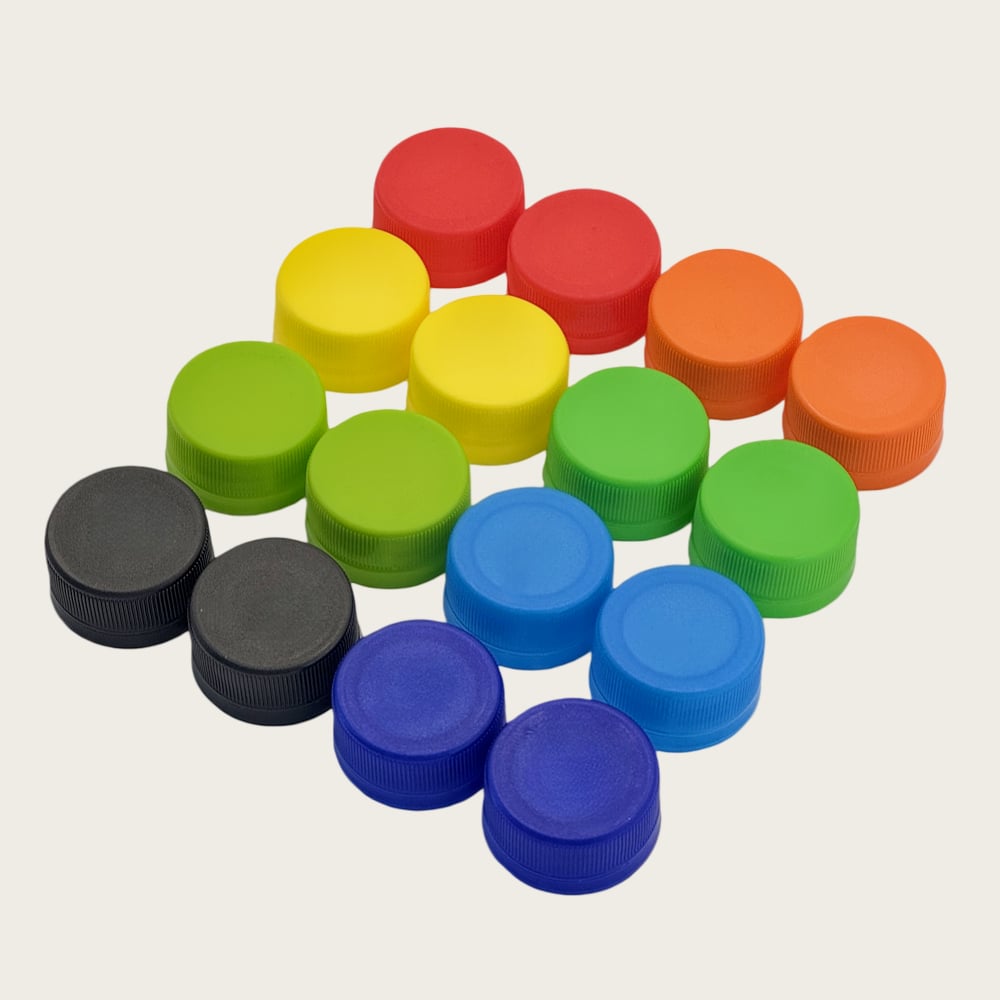
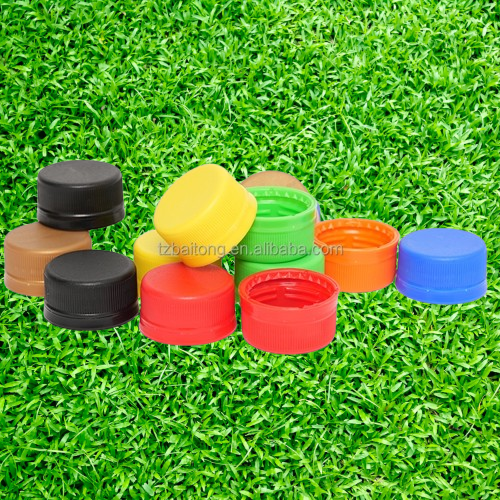
Brand identity in beverage packaging relies heavily on closure color and surface texture. A juice cap is one of the most visible elements of a bottle's shelf presence, and consumers often associate specific closure colors with flavor variants, brand tiers, or product freshness signals. When a brand's portfolio spans multiple bottle sizes, maintaining color consistency across all juice cap diameters is both a branding imperative and a technical challenge.

Masterbatch colorants used to tint juice cap resin can shift in perceived hue depending on wall thickness. A juice cap with a thicker skirt — typical of larger diameter variants — may appear slightly darker or more saturated than a thinner-walled smaller cap colored with the same masterbatch lot. This effect, known as 'metamerism shift' or 'thickness-induced color drift,' requires colorant formulators to adjust pigment loading across the diameter range to achieve visual uniformity under standard retail lighting conditions.

Surface finish decisions, including gloss level and any embossed or debossed texture on the cap's outer skirt, must also be harmonized across diameters. Mold texture specifications are applied during tooling manufacturing and can differ slightly between tools due to the grinding or EDM processes used to apply them. A disciplined juice cap supplier will cross-reference texture samples from all diameter molds in the family to ensure that the consumer's tactile experience is consistent across every bottle size in the range.

Logo Integration and Tamper Evidence Across Diameter Variants

Brand logos and product identifiers are frequently molded or printed directly onto the top panel and outer skirt of a juice cap. For a multi-diameter cap platform, logo placement templates must be recalculated for each cap size to maintain proportional visual balance. A logo occupying 40% of the top panel on a 28mm cap should occupy the same proportional area on a 38mm cap to avoid appearing either dwarfed or crowded in the larger format.

Tamper evidence features — most commonly a skirt bridge that connects the cap to a retention band applied over the bottle's neck bead — must also be adapted for each diameter. The bridge geometry, including bridge width and depth of score, is critical to ensuring that tamper bands detach cleanly upon first opening without leaving uncomfortable sharp edges that could affect the consumer experience. For each juice cap diameter in a multi-diameter family, tamper band geometry is typically validated separately through opening force tests conducted at both ambient and cold temperatures.

Regulatory requirements for tamper-evident closures vary by market, and producers exporting juice to multiple regions must ensure that each juice cap diameter in their range meets the applicable standards. Working with a single juice cap supplier who holds regional certifications across the relevant diameter sizes significantly simplifies the compliance documentation burden.

FAQ

What is the most common diameter for a juice cap used in single-serve PET bottles?

The 28mm diameter is the most widely used specification for single-serve PET juice bottles globally. This size offers a good balance between seal integrity, consumer usability, and filling line compatibility, making it the default choice for most single-serve juice formats. However, regional preferences and proprietary bottle designs may call for slightly different dimensions, so it is always advisable to verify the exact neck finish specification of the bottle before finalizing the juice cap design.

Can the same juice cap tooling be used for both hot-fill and cold-fill juice applications?

In most cases, the same outer cap geometry and tooling can be used for both filling methods, but the liner specification must change. Hot-fill applications require a liner material that maintains its sealing properties at temperatures up to 95°C, while cold-fill applications have more flexibility in liner choice. A juice cap supplier can often accommodate both requirements within the same cap shell by offering different liner insert options, allowing brands to use a single outer cap mold across multiple production formats.

How do I ensure color consistency in my juice cap across different bottle sizes?

Achieving color consistency across multiple juice cap diameters requires close collaboration with your cap supplier's colorant team. The supplier should conduct wall-thickness-corrected color trials for each diameter variant using the same resin base and measure the output against a standardized color target using a spectrophotometer. Requesting color approval plaques for each cap size before production begins, and specifying acceptable Delta-E tolerances in your purchase agreement, will give you the tools to manage consistency systematically over time.

What factors should I evaluate when consolidating to a multi-diameter juice cap platform from a single supplier?

The most important factors are diameter range coverage, tooling capacity, resin and liner flexibility, technical support quality, and certification scope. Confirm that the supplier's existing tooling family covers all the neck finish sizes in your bottle portfolio, and ask for documented application data showing torque ranges and filling line performance across each diameter. Evaluate whether the supplier holds the food-contact and tamper-evidence certifications required in your target markets, and assess their ability to deliver consistent quality across high-volume production runs on multiple mold cavities simultaneously.